
Maintain
How to Replace Water Softener Resin
How do you replace water softener resin? Bypass and unplug the softener, lift off the valve, empty the old beads, add gravel and then the same volume of new resin, and refill slowly.
By the Water Softener Guide editors · Updated
Disclosure: watersoftenerguide.net is owned by the team behind SoftPro Water Systems and Quality Water Treatment, which sell some of the parts and systems we link to. Our steps follow the makers' manuals and published instructions, checked October 2026. Always check your own model's manual first. Ownership disclosure
View at SoftPro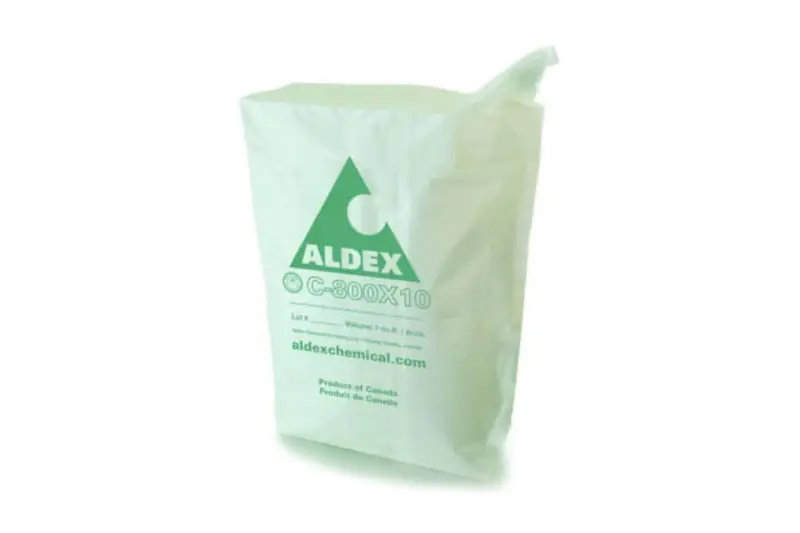
On this page
Key takeaways
- SoftPro's re-bed guide puts most resin life at 5 to 10 years, shorter with hard water or heavy use.
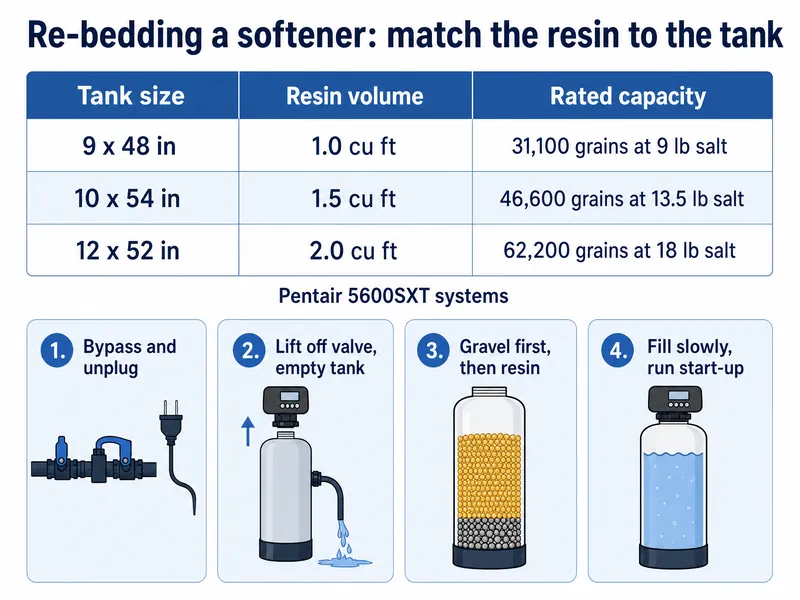
- Buy the volume the tank already holds: Pentair's three 5600SXT systems put 1 cu ft, 1.5 cu ft and 2 cu ft of resin in 9 x 48, 10 x 54 and 12 x 52 inch tanks.
- Purolite, a resin maker, says each 1 ppm of chlorine in the feed water halves resin life, which is why SoftPro recommends 10% cross-link resin on city water.
- Penn State Extension notes that some resin cannot be washed of contaminants and has to be replaced.
- The Pentair 5600SXT manual says to fill a media tank slowly, never with the water valve fully open, so new resin stays in the tank.
- Fleck and Pentair cycle a new bed through every regeneration step by hand; SoftPro and Quality Water Treatment say their pre-charged resin needs no first regeneration.
Resin numbers worth knowing
- 5 to 10 yearsTypical resin life in SoftPro's resin replacement guideSoftPro (our store)
- 50%Cut in resin life for each 1 ppm of chlorine in the incoming waterPurolite
- 4.0 mg/LEPA maximum for chlorine or chloramine in drinking waterU.S. EPA
- 1.0 cu ftResin in Pentair's 31,100-grain system, a 9 x 48 inch tankPentair 5600SXT manual
When should you replace water softener resin?
Replace the resin when softened water stays hard even though the softener regenerates, uses salt and passes every other check. SoftPro's resin replacement guide (SoftPro, our store) names returning hard water as the plainest sign, with scale, spotty dishes, poor lather and weaker flow alongside it, and puts most resin life at 5 to 10 years.
Two other signs point at the bed itself. Small, dark, round beads of about 0.3 to 1.0 mm in aerators or showerheads mean resin is escaping, usually through a cracked distributor; read resin beads in water first, because that part has to be replaced too. And iron fouling can be past rescue: Penn State Extension says red, oxidized iron clogs resin and that some beds cannot be washed clean.
What else makes softened water hard?
Most hard-water complaints have a cheaper cause than worn resin, so work through the valve's checklist first. The Pentair 5600SXT troubleshooting table lists, for hard water: the bypass left open, no salt, a plugged injector screen, too little water flowing into the brine tank, hardness held in the water heater, a leak at the distributor tube, and an internal valve leak.
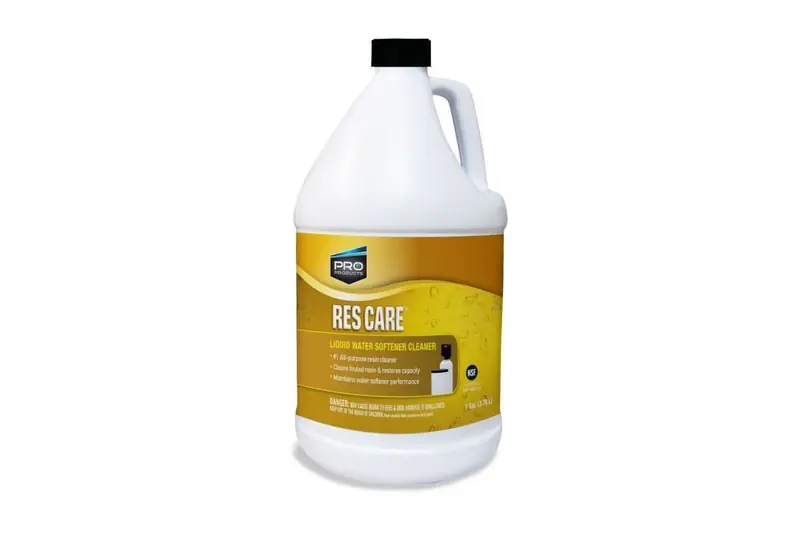
Check each of those with our troubleshooting guide, confirm the hardness number in the settings guide, and compare raw and softened water as shown in how to test water hardness. If iron is the suspect, a resin cleaner costs far less than a re-bed. EPA WaterSense recommends cleaning the beads every year in any case.
How much replacement resin do you need?
Buy the same number of cubic feet the tank holds now; the figure is on the tank label, in the manual or on the original order. SoftPro's guide says to work from the maker's specification and fill only to its recommended level, not above. Pentair's data sheet shows how volume, tank size and grain rating line up on one common valve.
| System | Tank | Resin | Rated capacity |
|---|---|---|---|
| VT-11-01 | 9 x 48 in | 1.0 cu ft | 31,100 grains at 9 lb salt |
| VT-17-01 | 10 x 54 in | 1.5 cu ft | 46,600 grains at 13.5 lb salt |
| VT-23-01 | 12 x 52 in | 2.0 cu ft | 62,200 grains at 18 lb salt |
Grain ratings depend on the salt dose, so match on tank size and cubic feet rather than on the number printed on a box. A bigger bed will not fit the same tank.
Which resin should you buy: 8% or 10% cross-link?
Choose 10% cross-link resin for chlorinated city water and standard or fine mesh resin for wells, matching what the tank held unless the water has changed. Purolite explains that higher cross-linking resists oxidation better, and that each 1 ppm of chlorine in the feed halves resin life, though 0.3 ppm of free chlorine does little harm in cold water. The EPA allows up to 4.0 mg/L of chlorine or chloramine in tap water.
- City water. SoftPro recommends 10% cross-linked resin for chlorinated supplies and sells Aldex Premium 10% cross-link resin (sold by SoftPro, our store), from $132.55 (October 2026).
- Well water with iron. SoftPro's fine mesh resin for well water with iron (sold by SoftPro, our store) is described as designed for well water and effective at removing iron, from $193.33 (October 2026). Red water, iron bacteria and high iron still need an iron filter first.
- Pentair's factory fill. The 5600SXT data sheet lists 8% cross-linked resin in all three systems.
Plan for the support layer too. SoftPro sells premium bedding gravel (sold by SoftPro, our store) in 12-lb bags, from $23.00 (October 2026), and says it promotes correct flow and water distribution under the resin. Its 10-inch resin and mineral tank funnel, from $35.00 (October 2026), narrows to 2.5 inches to fit the tank neck.
How do you remove the old resin?
Take the softener out of service, lift the valve off the tank and empty the media into buckets or heavy bags. Keep your valve's service manual open, since layouts differ. SoftPro lists pliers, a bucket, a funnel, a measuring cup and, if you have one, a shop vac.
- Shut off and bypass. Close the supply and put the softener in bypass; the bypass valve guide covers each handle type.
- Relieve the pressure. Pentair's service steps step the control into Backwash for a moment, then back to In Service.
- Unplug the valve. Never open a valve that still has power.
- Disconnect the lines. Undo the inlet and outlet connections, the drain line and the brine line, and label each one.
- Lift off the valve. Protect its O-rings and seals as it comes free of the distributor tube.
- Empty the tank. Drain or siphon the water, then scoop or vacuum out the resin and any gravel without damaging the distributor basket or center tube. Our guide to draining a softener covers the water side.
A full resin tank is heavy and awkward. If a connection or the lifting is beyond you, hire a licensed plumber.
Refilling the tank with new resin
Fill in layers: gravel first if the tank uses it, then resin, with the distributor tube held in the center.
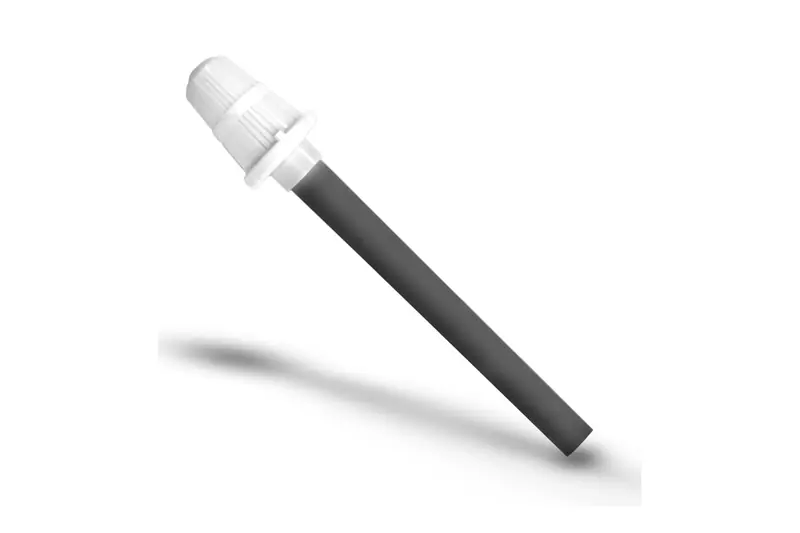
- Seat the distributor tube. The Fleck 5600SXT manual says the tube should be cut to the dimensional drawing or flush with the top of the tank. Cover its open end so no media falls in.
- Add the gravel. SoftPro's guide pours a small layer of gravel first to protect the distributor basket.
- Pour the resin. Use the funnel and stop at the maker's fill level.
- Fit the valve. Lubricate the distributor and tank O-rings with 100% silicone lubricant only, never petroleum grease, as both Fleck and Pentair require, and thread the valve on by hand.
- Keep the tank upright. Pentair warns that tipping or dropping a media tank lets particles enter the valve, which then has to be taken apart and cleaned.
How do you restart a softener after a re-bed?
Fill the tank slowly with the bypass barely open, then run the start-up routine your valve or resin calls for.
- Fill slowly. Pentair's manual says not to open the water valve fully when filling the media tank.
- Rinse the bed. SoftPro's guide runs a backwash to clear manufacturing residue and fine particles. In the Fleck and Pentair start-up, a new bed goes through every step by hand: a backwash that Fleck runs for 10 minutes of steady drain flow, a brine draw that continues until brine is pulled from the tank, a 5-minute rapid rinse, and a brine fill to finish.
- Follow your system's steps. SoftPro and Quality Water Treatment ship pre-charged systems that skip the first regeneration, so check which applies to the resin you bought.
- Sanitize. SoftPro's guide sanitizes the new bed with bleach or a resin cleaner, following the maker's instructions; the sanitizing guide gives the doses.
- Check for leaks and the clock. Look over every seal, then confirm time of day and hardness.
Quality Water Treatment notes that if pressure drops badly at first start-up, a backwash can reclassify the media. Afterward, keep the new bed healthy with a yearly softener maintenance routine.
How we put this page together
Sources: Pentair's 5600SXT data sheet and manual (4005293 Rev B), Fleck's downflow service manual for the 5600SXT (42684 Rev B), SoftPro's resin replacement guide and product pages, Quality Water Treatment's Fleck 5600SXT install guide, Purolite's resin-life note, EPA WaterSense, the EPA drinking water regulations, and Penn State and NDSU Extension, checked October 2026. Prices are the owned stores' own listings. We left out unsourced lifespans such as "10 to 15 years on well water", disposal rules we could not confirm, and any lab testing.
Common questions
Which replacement resin suits a well with iron?
SoftPro sells a fine mesh resin it describes as designed for well water and effective at removing iron. That covers only dissolved, clear-water iron within your softener's limit; red water, iron bacteria or higher iron need an iron filter ahead of the softener.
Does the gravel under-bed need replacing too?
If your tank had a gravel under-bed, put a fresh layer back with the resin. SoftPro's guide uses it to protect the distributor basket, and its product page says the gravel supports correct flow and water distribution under the resin.
Is a re-bed cheaper than a new softener?
Usually, because the valve and tanks are reused. Penn State puts new softener hardware at about $500 to $1,500, and NDSU Extension cites retail prices of about $400 to $2,700, while 10% resin starts from $132.55 (October 2026). A worn valve or cracked tank changes the math.
Why did resin wear out early on city water?
Chlorine is the usual suspect. Purolite says every 1 ppm of chlorine in the feed halves resin life, and higher cross-linking resists that attack. If the tank held 8% resin on a chlorinated supply, refill with 10%.
Can a softener be re-bedded without removing the valve?
Not on a standard top-mounted valve like the Fleck 5600SXT; the resin comes out through the tank neck once the valve and distributor tube are lifted. Check your own manual if your tank has a separate fill port.
How long does a re-bed take?
The sources give no time for a re-bed itself. Plan for the start-up alone to take a while: the Fleck start-up backwash runs until the drain has flowed steadily for 10 minutes, followed by brine draw, a 5-minute rapid rinse and brine fill.
Does new resin make the water cloudy at first?
Fine particles and manufacturing residue can wash out of a new bed, which is why SoftPro's guide runs a backwash first. Before normal use, open a nearby cold softened tap and let it run clear.
Before and after a re-bed
More help: see our water softener maintenance and repair guides.