
Fix
Why Your Water Softener Isn't Using Salt
A water softener not using salt usually has a salt bridge, a clogged injector or brine line, or a valve that isn't starting regenerations; test the water first, since slow salt use can be normal.
By the Water Softener Guide editors · Updated
Disclosure: watersoftenerguide.net is owned by the team behind SoftPro Water Systems and Quality Water Treatment, which sell some of the parts and systems we link to. Our steps follow the makers' manuals and published instructions, checked October 2026. Always check your own model's manual first. Ownership disclosure
View at Quality Water Treatment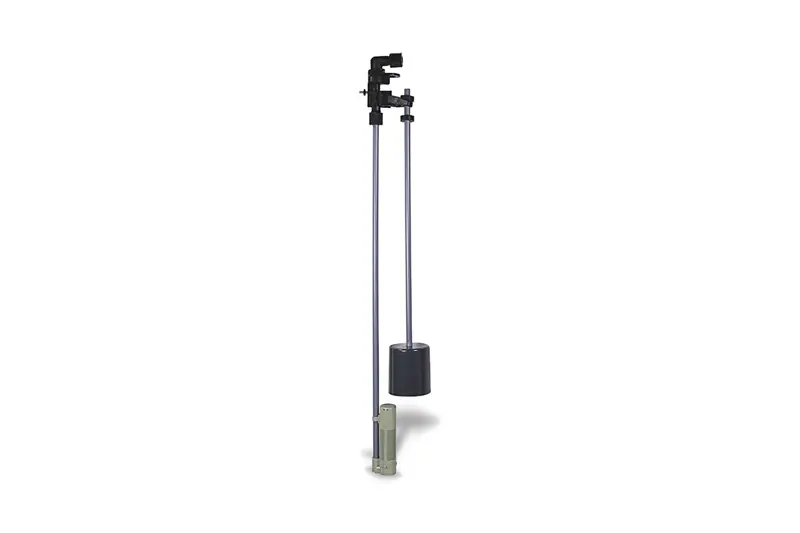
On this page
Key takeaways
- A 1.0 cu ft Pentair 5600SXT uses 3 to 15 lb of salt per regeneration depending on the setting, per Pentair's 5600SXT manual.
- Pentair says to break a salt bridge with a broom handle, wait 2 hours, then regenerate; a second recharge may be needed.
- The Fleck 5600SXT service manual gives 6 causes of a valve that fails to draw brine, including line pressure under 20 psi.
- SoftPro's brine-draw test holds Extra Cycle about 5 seconds, then steps the valve to BD and checks the brine line for suction.
- A softener left in bypass draws no brine at all, so it uses no salt.
- Pentair lets the day override run from Off to 99 days, so a valve set to Off can go a long time between cycles.
Is your water softener really not using salt?
Often it is, just slowly. The rated capacity table in Pentair's 5600SXT manual shows how little salt one regeneration takes, and Penn State Extension's worked example has a 20,000-grain unit for 4 people regenerating only every 6 to 7 days.
| Resin bed | Low setting | Middle setting | High setting |
|---|---|---|---|
| 1.0 cu ft | 3 lb | 9 lb | 15 lb |
| 1.5 cu ft | 4.5 lb | 13.5 lb | 22.5 lb |
| 2.0 cu ft | 6 lb | 18 lb | 30 lb |
At 3 to 9 lb a week, the level in a large brine tank can look unchanged for a while. Two quick checks tell you whether there is a real problem:
- Test the softened water. Test a cold kitchen tap and a raw-water tap side by side. If softened water still tests soft, the softener is using salt, just slowly. The is it working guide explains the test.
- Watch the salt for a month. SoftPro's troubleshooting page (SoftPro, our store) says to suspect a bridge if the level hasn't changed for weeks, and Quality Water Treatment's troubleshooting page (Quality Water Treatment, our store) lists unchanged salt among the signs of a failing softener.
If the water is hard and the salt hasn't moved, carry on below. Switch to bypass and unplug the control before you open anything.
What the sources say
- 3–15 lbsalt per regeneration on a 1.0 cu ft 5600SXTPentair 5600SXT manual
- 2 hourswait after breaking a bridgePentair 5600SXT manual
- 6–7 daysbetween regenerations in a worked examplePenn State Extension
- Off–99 daysday override rangePentair 5600SXT manual
How do you find and break a salt bridge?
A salt bridge is a hard crust of pellets wedged across the tank above the water. The salt on top looks full, but the water underneath never turns to brine. Pentair's manual notes that the softener still runs its regeneration, so the valve looks normal while the resin goes unrecharged.
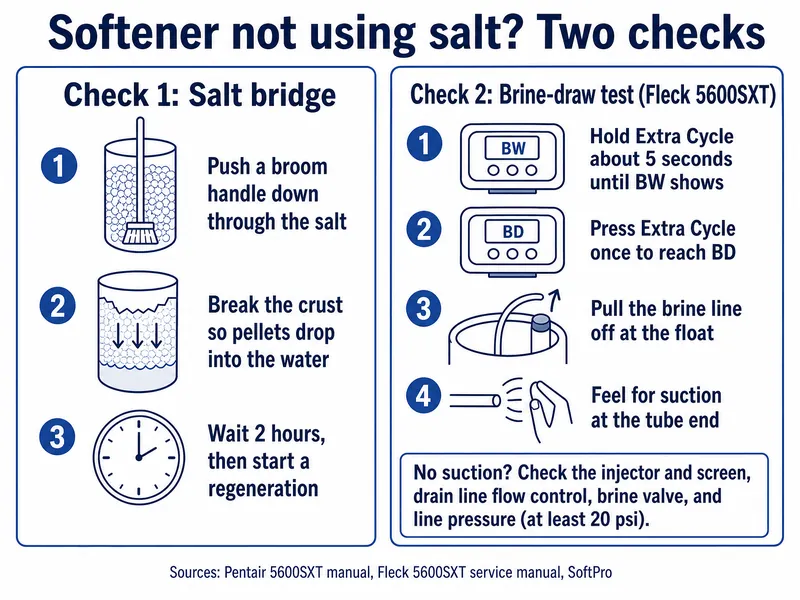
- Probe the salt. Push a broom handle straight down in several spots. If it stops on a hard layer with a gap beneath, you have a bridge.
- Break it up. Pound the crust apart carefully until the pieces drop into the water.
- Wait, then regenerate. Pentair says wait 2 hours for brine to form, then start a regeneration. A second recharge may be needed before the water tests soft.
To prevent it, keep salt roughly one-quarter to one-half full and above the water line, and use pellets or solar crystals rather than rock salt. Pentair says pellets bridge more easily once the tank is filled past half. If the bottom has turned to mush, the tank needs emptying and cleaning; see how to clean a brine tank. The salt bridge guide has more on prevention.
How do you test brine draw on a Fleck 5600SXT?
During the brine step, water rushing through the injector (a small venturi in the valve) creates suction that pulls brine up the brine line. If the injector, its screen or the line is blocked, nothing gets drawn and the salt sits untouched. SoftPro's Fleck 5600SXT guide (SoftPro, our store) describes the test:
- Hold Extra Cycle about 5 seconds to start a regeneration, and wait for BW (backwash) on the display.
- Press Extra Cycle once to move to BD (brine draw).
- Disconnect the brine line at the float assembly and feel the end of the tube, or dip it in a cup of water.
- Suction means brine draw works. No suction means check the injector, the drain line and the brine valve.
What blocks the injector and brine line?
The Fleck 5600SXT service manual lists these causes for a valve that fails to draw brine: a plugged drain line flow control, a plugged injector, a plugged injector screen, line pressure below 20 psi, an internal control leak, or a service adapter that did not cycle.
To clean the injector, the Fleck manual has you bypass the softener, step the control briefly into backwash to relieve pressure, unplug it, then take off the cap, lift out the screen, and remove the nozzle and throat. Refit with new silicone-lubricated O-rings. Full steps are in our injector cleaning guide. Quality Water Treatment says to replace an injector that cleaning won't clear.
Check the brine line for kinks and the drain line for blockages too; a restricted drain stops the injector from creating suction. If the float or air check in the brine well is stuck, replace the assembly. For Fleck brine tanks, QWT's Fleck 2310 brine valve assembly (sold by Quality Water Treatment, our store), from $60 (October 2026), swaps a stuck float and pickup in one go. The listing pairs a #500 air check and brine pickup tube with the 2310 brine valve, which the store says prevents overfilling.
Which settings stop a water softener using salt?
When suction is fine, the valve may simply not be starting regenerations.
- Power. The Fleck manual says the valve needs an uninterrupted supply. Pentair warns against a switched outlet, which can be turned off by accident.
- Clock. After a power failure the time flashes. Press any button and reset it, or regenerations run at the wrong hour.
- Bypass. A softener left in bypass after a repair uses no salt. Turn it fully to service; see the bypass valve guide.
- Hardness setting. If hardness is set far below your real reading, a metered valve thinks it has capacity left and regenerates rarely. Enter raw-water hardness in gpg; the settings guide explains the rest.
- Day override. Pentair describes DO as the maximum days between regenerations, from Off to 99. Off on a lightly used home can mean long gaps, and Pentair's Err 2 appears after 99 days with no regeneration.
- Force one. On a 5600SXT, the Fleck manual has you hold Extra Cycle for 5 seconds to regenerate now; then watch the salt over the next few cycles.
If the valve still won't cycle, the troubleshooting guide covers the motor, board and internal seals.
How we put this page together
This page is based on Pentair's 5600SXT operation manual (4005293 Rev B), Fleck's 42684 Rev B service manual for the 5600SXT, SoftPro's and Quality Water Treatment's troubleshooting pages for the Fleck valves they sell, and Penn State Extension's water softening publication. Everything was checked in October 2026. Not included: store estimates of how many weeks a bag of salt lasts, since they depend on hardness and water use, and salt-use measurements of our own.
Related guides


Common questions
How long should a full brine tank of salt last?
It depends on hardness, water use and the salt setting. Pentair's table runs from 3 to 15 lb per regeneration on a 1.0 cu ft unit, so a high setting empties a tank about five times faster than the low one.
Can a salt bridge form in a tank that looks full?
Yes. That is the usual picture: a full-looking tank with a hollow under the crust. Probe it with a broom handle rather than judging by the top layer.
Does a softener on bypass use any salt?
No. In bypass, water goes around the softener and the valve does not draw brine. Check the bypass after any plumbing work.
Will switching salt type fix a softener that isn't using salt?
Only if the old salt was bridging or mushing. Pellets or solar crystals are the right choice, and both the Fleck and Pentair manuals rule out rock salt.
Can low water pressure stop a softener from drawing salt?
Yes. The Fleck manual lists line pressure that is too low among the causes of no brine draw and says to raise it to 20 psi. On a well, check the pressure switch settings and gauge.
Is it normal for salt use to drop in winter or when the house is empty?
On a metered valve, yes: fewer gallons used means fewer regenerations. A timer valve, by contrast, regenerates on its day schedule whether or not water was used.
Why does the salt level drop but the water stays hard?
Salt is dissolving, but brine may not be reaching the resin, or hard water is getting around it. Check the bypass, run the brine-draw test, and see the using too much salt page if the level falls fast.
More help: see our water softener maintenance and repair guides.