
Fix
Water Softener Brine Tank Full of Water
A water softener brine tank full of water usually means the valve refills the tank but can't draw the brine back out, most often from a plugged injector, drain line flow control or brine valve.
By the Water Softener Guide editors · Updated
Disclosure: watersoftenerguide.net is owned by the team behind SoftPro Water Systems and Quality Water Treatment, which sell some of the parts and systems we link to. Our steps follow the makers' manuals and published instructions, checked October 2026. Always check your own model's manual first. Ownership disclosure
View at Quality Water Treatment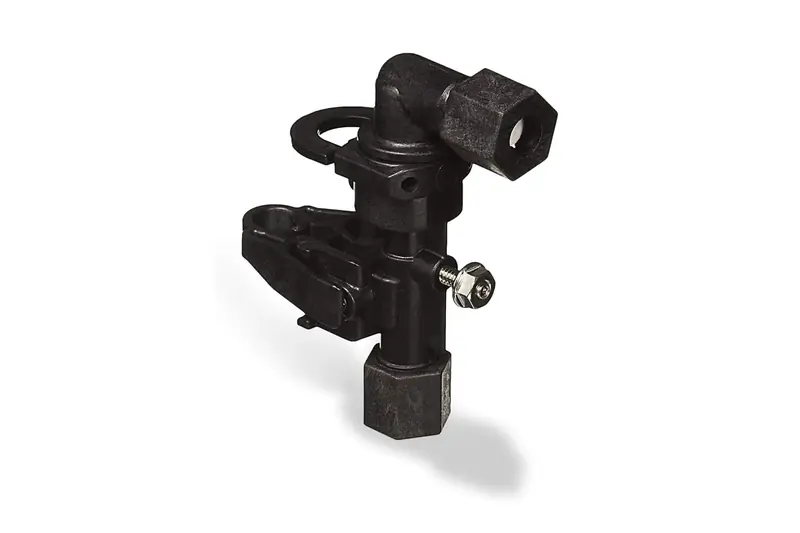
On this page
Key takeaways
- The Fleck 5600SXT service manual lists 5 causes of excess water in the brine tank, led by a plugged drain line flow control and a plugged injector.
- Some water is normal: at start-up the Fleck manual puts about 1 inch above the grid plate, QWT's guide 2 gallons and SoftPro's Elite guide 3 gallons.
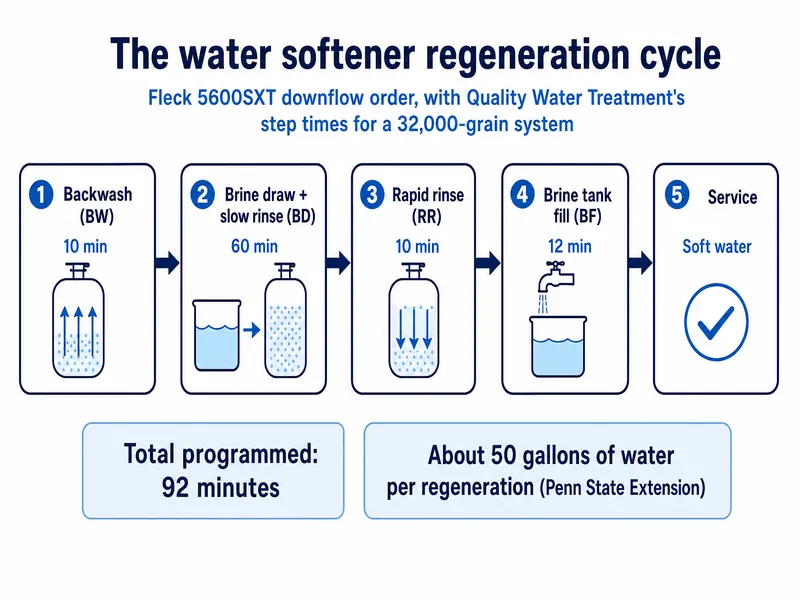
- Fleck SXT valves meter the refill by BF (brine fill) minutes; Quality Water Treatment programs 12 on its 32,000-grain systems.
- A valve needs at least 20 psi to draw brine, per the Fleck manual's troubleshooting table.
- Pentair's 5600SXT manual wants the overflow on its own line to a drain, never tied into the valve's drain line.
- Quality Water Treatment's troubleshooting page (Quality Water Treatment, our store) says to call a technician if standing water returns after cleaning.
How much water is normal in a water softener brine tank?
Some water is normal in most salt-based softeners; Nebraska Extension describes regeneration as brine passing through the resin and then flushing to drain, and that brine has to be made in the tank first. During the last step of a regeneration the valve refills the tank so the water can dissolve salt into brine for the next cycle. How much water comes back depends on the valve's programmed BF (brine fill) minutes rather than a float on Fleck SXT models; more minutes, more water.
Even a new tank starts with water in it, and the start-up amount varies by maker:
| Guide | Water added at start-up | Note |
|---|---|---|
| Fleck 5600SXT service manual | About 1 inch above the grid plate | Or to the top of the air check if there is no grid |
| Quality Water Treatment Fleck 5600SXT guide | 2 gallons | Pre-charged resin, no initial regeneration |
| SoftPro Elite guide | 3 gallons | Pre-charged resin, no initial regeneration |
What isn't normal:
- Water standing above the salt. The Fleck manual says keep the salt level above the water level.
- Water rising toward the overflow fitting, or brine running out of the overflow line.
- A level that keeps climbing after each regeneration while the water turns hard.
Your manual and your valve's BF setting decide the right level for your system; treat any inch figure you read online as approximate.
What the manuals say
- 20 psiminimum working pressure for the 5600SXTPentair 5600SXT manual
- 60–120 mintypical brining-plus-flushing windowNebraska Extension G1491
- 50 galwater used per regenerationPenn State Extension
Why does a water softener brine tank fill with water?
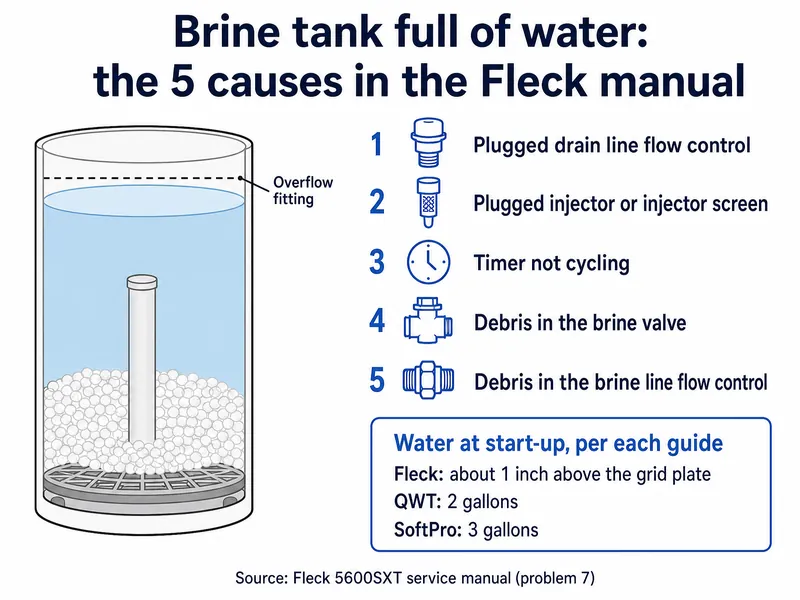
It fills because water goes in during brine fill but doesn't come out during brine draw. The Fleck 5600SXT service manual's problem 7, "excessive water in brine tank", gives five causes, and Quality Water Treatment's page on salt tanks full of water (Quality Water Treatment, our store) adds a failed safety float, salt bridges and clogged drain lines.
| Cause | What happens | Fix |
|---|---|---|
| Plugged drain line flow control | Flow through the injector stops | Clean the flow control and drain line |
| Plugged injector or injector screen | No suction, so brine is never drawn out | Clean or replace the injector and screen |
| Timer not cycling | The valve stalls in a fill step | Check power, then the control |
| Debris in the brine valve | Refill doesn't stop when it should | Clean the valve, replace the seat |
| Debris in the brine line flow control | Refill isn't metered correctly | Clean the brine line flow control |
| Failed safety float | Water passes the float shutoff | Replace the float assembly |
| Kinked or blocked drain line | Same as a plugged flow control | Straighten or replace the line |
How do you fix a brine tank full of water?
Before you start, put the softener in bypass and unplug the valve.
- Remove extra water if needed. If the tank is close to overflowing, scoop or siphon some out, and pour the brine away from plants and lawns.
- Check the drain line. Follow it from the valve to the drain. Straighten kinks, clear blockages and confirm it isn't pinched behind the tank. The drain line guide covers sizing.
- Clean the injector and screen. The Fleck manual's steps: step the control into backwash briefly to relieve pressure, return it to service, unplug, disconnect the brine tube and drain line at the injector body, remove the two screws, then the cap and screen, and unscrew the nozzle and throat. QWT suggests clearing the screen with a fine needle and mild vinegar. See cleaning a water softener injector.
- Inspect the brine line and brine valve. Pull the brine valve out of the brine well; SoftPro's Fleck 5600SXT guide (SoftPro, our store) names a stuck safety float and a failed brine valve seal as reasons a tank won't drain or refill properly. Look for salt crust, grit or a float that doesn't move freely. Rinse it in clean water.
- Check the BF time. On a Fleck SXT, confirm the brine fill time hasn't been changed. QWT programs 12 minutes on its 32,000-grain systems and 7 minutes with SST-60 resin, and says the right figure depends on capacity. Our Fleck 5600SXT programming guide shows where to find it.
- Reassemble and test brine draw. Return the bypass to service slowly, plug in, and start a manual regeneration. When the display reaches BD, unhook the brine tube at the float; a working injector pulls on it.
- Watch one full cycle. The water level in the tank should drop during brine draw and rise again only during brine fill.
Once it is back together, the Fleck manual has you look over every seal for drips, checking the drain seal while the valve sits in backwash.
When should you replace brine tank parts?
Cleaning fixes most cases. Replace parts when:
- The injector won't clear. QWT's advice is to replace any injector that cleaning won't save, and to inspect the injector and brine line every year.
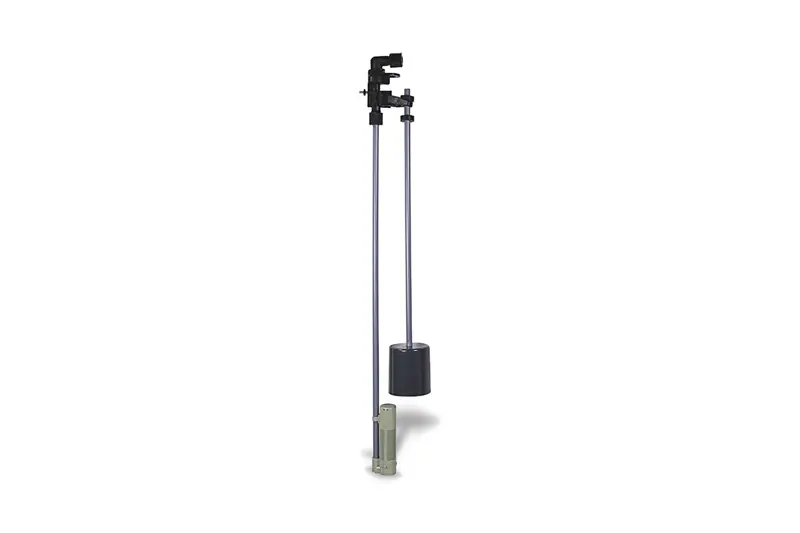
- The float or brine valve sticks. Worn, cracked or crusted assemblies let water past. Quality Water Treatment sells a Fleck 2310 brine valve assembly (sold by Quality Water Treatment, our store) for Fleck brine tanks, from $60 (October 2026). It combines the 2310 brine valve with a #500 air check and brine pickup tube, and the store says the valve prevents overfilling.
- The control keeps stalling. If the valve stops between steps, worn seals or a piston may be at fault. QWT advises servicing the control valve every year; on a 5600SXT its rebuild kit is #60010307.
- The tank is full of sludge. Mushy salt at the bottom blocks the pickup. Empty and clean the tank as described in how to clean a brine tank.
Check the overflow too. Pentair's 5600SXT manual wants a dedicated overflow tube that slopes down to its own drain with an air gap, kept separate from the valve's drain tubing.
What if the brine tank keeps filling after the fix?
Then the fault is likely inside the valve. Penn State Extension estimates about 50 gallons of water per regeneration, so a valve stuck in a fill or rinse step wastes water quickly as well. If brine draw works and the tank still fills, the troubleshooting guide covers internal valve leaks, and QWT recommends calling a qualified technician when standing water returns after cleaning. Extra brine water also wastes salt; see water softener using too much salt.
How we put this page together
This guide relies on problem 7 of the Fleck 5600SXT service manual's troubleshooting table (P/N 42684 Rev B), Pentair's 5600SXT operation manual, the start-up sections of Quality Water Treatment's and SoftPro's installation guides for their own softeners, and Quality Water Treatment's troubleshooting pages, reviewed in October 2026. Inch targets for normal brine levels were omitted because the store page that gives them contradicts itself, and no tanks were measured for this page.
Related guides
Common questions
Is a brine tank with no water in it a problem?
Not always. Some brine tanks are designed to hold very little water between regenerations, while others always hold some. Check your manual for which kind you have, and test the softened water, before assuming a fault.
Does scooping out the extra water fix the problem?
Only as a stopgap. The water will build up again until the injector, drain line or brine valve is fixed, and the softener may deliver hard water meanwhile.
Why did my brine tank overflow onto the floor?
Overflowing usually means the refill didn't stop and the safety float failed too. Pentair's manual explains that an overflow line run to a drain sends the excess there instead of onto the floor.
Does a full brine tank mean the resin is bad?
Rarely. Resin problems show up as hard water or low pressure, not extra brine water. Look at the injector, drain line and brine valve first.
Can a power outage leave extra water in the brine tank?
It can. If power drops during brine fill, the valve may stop mid-step, and the Fleck table lists a timer that isn't cycling as one cause. Reset the clock and run a manual regeneration to finish a cycle.
Should the water in the brine tank cover the salt?
No. The Fleck manual says to keep the salt level above the water level. If water covers all the salt, either too much water is coming in or too little is being drawn out.
How long does it take the level to drop during a regeneration?
The draw happens during the brine and slow rinse step. Nebraska Extension G1491 puts brining plus the flush at one to two hours, so keep an eye on the tank during that stretch.
Parts for this job
Brine Valve Assembly
Check current options and prices at Quality Water Treatment.
View at Quality Water Treatmentwatersoftenerguide.net is owned by the team behind SoftPro Water Systems and Quality Water Treatment, which sell some of the parts and systems we link to. Ownership disclosure
More help: see our water softener maintenance and repair guides.