
Maintain
Cleaning a Water Softener Injector
Water softener injector cleaning clears the venturi nozzle, throat and screen that pull brine into the resin; when they clog, brine stops drawing, the water turns hard and the brine tank overfills.
By the Water Softener Guide editors · Updated
On this page
- What does a water softener injector do?
- What are the signs of a clogged injector?
- How do you test brine draw before opening the valve?
- Water softener injector cleaning, step by step
- Which injector size does your valve use?
- How do you reassemble and test the injector?
- When should the injector be replaced instead of cleaned?
- Common questions
Key takeaways
- The Fleck 5600SXT service manual lists a plugged injector or screen as a cause of hard water, excess water in the brine tank and failure to draw brine.
- SoftPro calls a plugged injector the most common cause of no brine draw on the Fleck 5600SXT.
- The same Fleck manual needs at least 20 psi for the regeneration valve to work, so check pressure before blaming the injector.
- On the 5600SXT, two screws hold the injector body; the nozzle, throat and screen come out once the cap is off, per the Pentair 5600SXT manual.
- Quality Water Treatment says to inspect the injector and brine line once a year and replace an injector that will not come clean.
- Fleck color-codes injector nozzles and throats by tank size, from #000 brown for 6-inch tanks to #2 blue for 12-inch tanks.
Injector facts from the manuals
- 20 psiMinimum water pressure for the Fleck 5600SXT regeneration valve to operateFleck 5600SXT service manual
- 2Screws holding the injector body to the 5600SXT valvePentair 5600SXT manual
- 3Faults the Fleck table traces to a plugged injector: hard water, excess brine water, no brine drawFleck 5600SXT service manual
- 1 a yearHow often to inspect the injector and brine lineQuality Water Treatment (our store)
What does a water softener injector do?
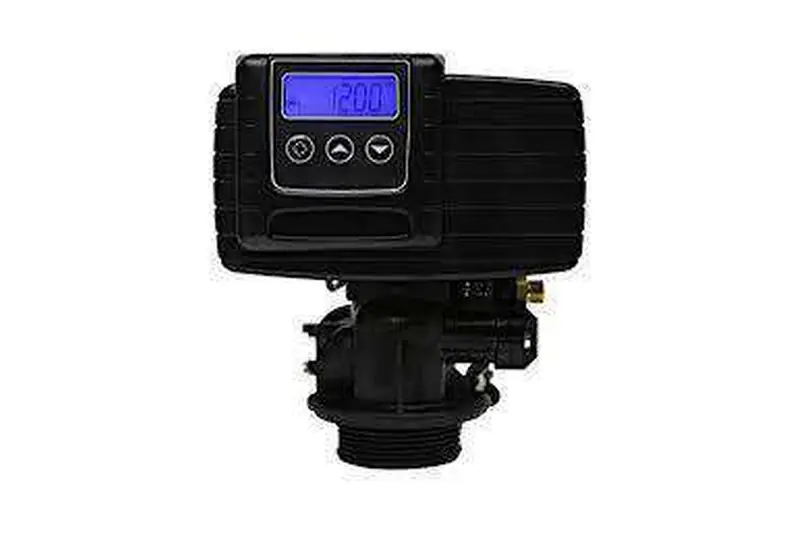
The injector, or venturi, uses the water's own pressure to suck brine out of the brine tank and push it through the resin during regeneration. Water jets through a tiny nozzle into a throat, and the jet creates suction on the brine line; a fine screen in front catches grit. On Fleck 5600SXT valves the assembly sits in the valve body under a cap held by two screws.
The passages are small, so sediment, salt residue or iron can block them. The valve still runs its cycle on schedule, but no brine reaches the beads and they never recharge. For a tour of the rest of the valve, see water softener parts explained and the control valve guide.
What are the signs of a clogged injector?
Hard water, a brine tank that fills higher and higher, and salt that never goes down are the classic signs. The Fleck 5600SXT service manual troubleshooting table names a plugged injector or screen under three problems:
- Hard water, even with salt in the tank and the right settings.
- Excessive water in the brine tank, because the refill goes in and nothing is drawn out. See brine tank full of water.
- Softener fails to draw brine, alongside a plugged drain line flow control, an internal leak and line pressure below 20 psi.
Rule out the salt side first. EPA WaterSense explains that salt can harden over the brine well openings and block water moving between the tanks; it suggests a gallon of hot tap water, about 10 minutes, then a broom handle. A crust higher up is a salt bridge, and our guide to a softener not using salt covers the full list.
How do you test brine draw before opening the valve?
Start a manual regeneration, step it to brine draw and feel the brine line for suction. SoftPro gives this check for the Fleck 5600SXT:
- Start a regeneration. Hold Extra Cycle for about 5 seconds until BW (backwash) shows.
- Skip to brine draw. Press Extra Cycle once more to reach BD.
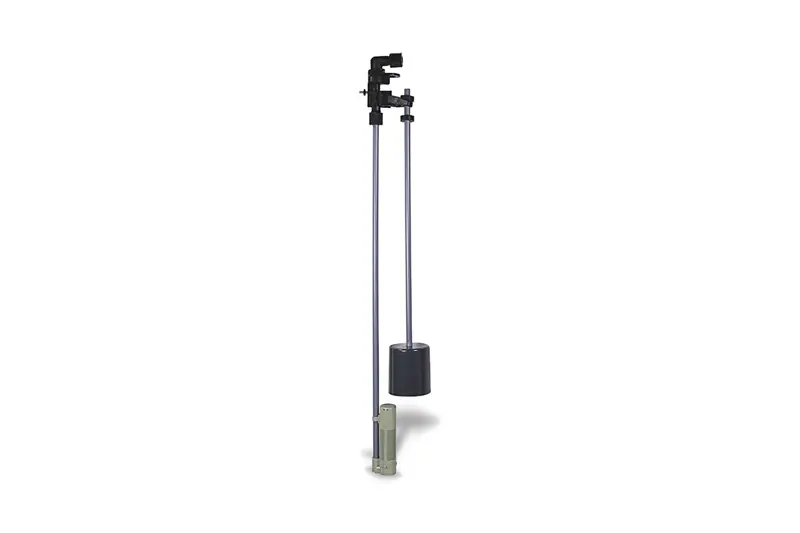
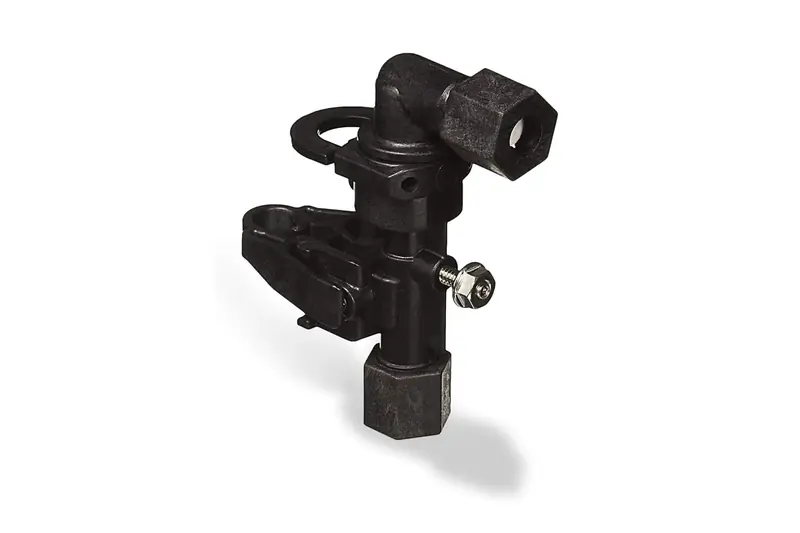
- Test the line. Disconnect the brine line at the float assembly in the brine tank, then feel the open end for pull or dip it in water and watch for it being drawn up.
Strong suction with a tank that still overfills points at the brine valve and float; NDSU Extension notes that assembly should be checked and cleaned as often as needed. No suction points at the injector, its screen or the drain line flow control.
Water softener injector cleaning, step by step
These steps follow the service instructions in the Fleck and Pentair 5600SXT manuals; other valves place the injector elsewhere, so check your own manual.
- Turn off the water. Put an integral bypass in bypass; with a three-valve bypass, open the bypass line first, then close the inlet and outlet. The bypass valve guide shows each type.
- Relieve the pressure. Step the control into Backwash for a moment, then return it to In Service. The Fleck manual warns that the system must be depressurized before any connection comes off.
- Unplug the valve.
- Disconnect the lines. Take the brine tube and drain line off the injector body.
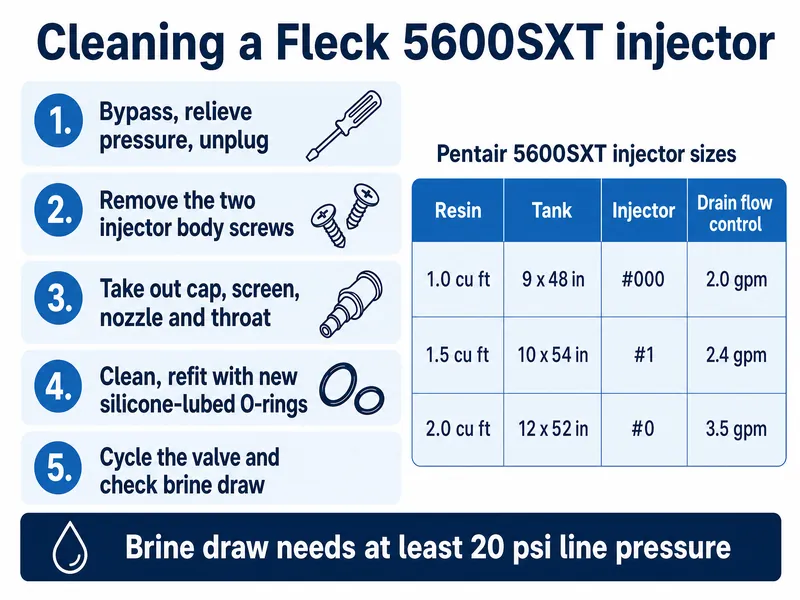
- Remove the injector body. Undo the two mounting screws.
- Take out the cap and screen. Then unscrew the nozzle and throat from the body.
- Clean each part. SoftPro soaks the nozzle, throat and screen in white vinegar or a descaler, blows them out with compressed air and clears the passages with a small nylon brush. Quality Water Treatment cleans the screen with a fine needle and a mild vinegar solution.
- Inspect. If deposits will not come off, replace the injector, as Quality Water Treatment advises.
Vinegar is for loose parts on the bench. Quality Water Treatment warns against pouring it into the brine tank.
Which injector size does your valve use?
Reuse the size you took out; the number is stamped or color-coded on the nozzle and throat. The Fleck 5600SXT parts list codes them by tank diameter.
| Injector | Color | Tank diameter | Nozzle / throat part |
|---|---|---|---|
| #000 | Brown | 6 in | 10913-000 / 10914-000 |
| #00 | Violet | 7 in | 10913-00 / 10914-00 |
| #0 | Red | 8 in | 10913-0 / 10914-0 |
| #1 | White | 9 and 10 in | 10913-1 / 10914-1 |
| #2 | Blue | 12 in | 10913-2 / 10914-2 |
Complete systems do not always follow that chart. Pentair's own 5600SXT systems pair injector #000 with the 9 x 48 inch tank, #1 with the 10 x 54, and #0 with the 12 x 52, each matched to its own drain line flow control (2.0, 2.4 and 3.5 gpm). So match the old part, not the tank alone.
How do you reassemble and test the injector?
Refit the parts on new, silicone-lubricated O-rings, restore water slowly, then cycle the valve and repeat the suction test.
- Fit new O-rings. Pentair's steps lubricate the new cap O-ring and the three O-rings on the injector body bosses with silicone; never use petroleum grease.
- Refit and tighten. Screw in the nozzle and throat, fit the screen and cap, and tighten the two screws.
- Reconnect the brine tube and drain line.
- Return to service. Open the bypass slowly, and make sure any bypass line is shut.
- Check for leaks. Look over every seal; the manuals check the drain seal with the control in Backwash.
- Plug in, set the time and cycle the valve by hand. The Fleck 5600SXT programming guide has the button details.
- Confirm brine draw. Repeat the BD suction test and make sure there is enough salt in the brine tank.
When should the injector be replaced instead of cleaned?
Replace it when deposits will not clear, a part is cracked, or brine still will not draw after cleaning. Quality Water Treatment advises a technician if the brine tank keeps filling after the injector is cleaned. While the valve is open, consider the rest of its service: the same store's Fleck install guide calls for servicing the piston, seals and spacers every year, using kit 60010307 on its 5600SXT systems. On iron-bearing wells, Penn State Extension calls iron fouling a common maintenance problem, so add the injector to your yearly maintenance schedule.
How we put this page together
Sources: the Fleck 5600SXT downflow service manual and the Pentair 5600SXT system manual (4005293 Rev B), both on pentair.com; SoftPro's Fleck 5600SXT problem guide; Quality Water Treatment's troubleshooting page and Fleck install guide; EPA WaterSense, NDSU and Penn State Extension; checked October 2026. We left out SoftPro's vinegar soak time, because the same page gives two different figures, and we did no bench testing of cleaning methods.
Common questions
How can you tell whether the injector or the brine valve is at fault?
Run the brine-draw test. Strong suction during BD while the tank still overfills points at the brine valve and float. No suction points at the injector, its screen or the drain line flow control.
Can low water pressure stop the injector working?
Yes. The Fleck manual needs at least 20 psi for the regeneration valve, and its troubleshooting table says to raise line pressure to 20 psi when the softener fails to draw brine. Check the pressure before taking the valve apart.
Is it safe to pour vinegar into the brine tank to clear the injector?
No. Vinegar belongs only on injector parts you have taken off and set on the bench; Quality Water Treatment says it should not go into the brine tank. Take the injector out, clean it, and replace it if it will not come clean.
Does the valve need reprogramming after the injector is cleaned?
Usually you only reset the time of day after plugging back in. If the display or settings look wrong, check them against the settings guide.
What do the colors on a Fleck injector mean?
They mark the size. On the 5600SXT, brown is #000, violet #00, red #0, white #1 and blue #2. Fit a nozzle and throat of the same number as the ones you removed.
Can a clogged injector make a softener use too much salt?
Indirectly. The Fleck manual lists excess water in the brine tank as a cause of high salt use, and a plugged injector is one cause of that excess water. Clean the injector, then check the brine fill and salt settings.
If brine still won't draw
More help: see our water softener guides.