
Fix
Water Softener Troubleshooting, Step by Step
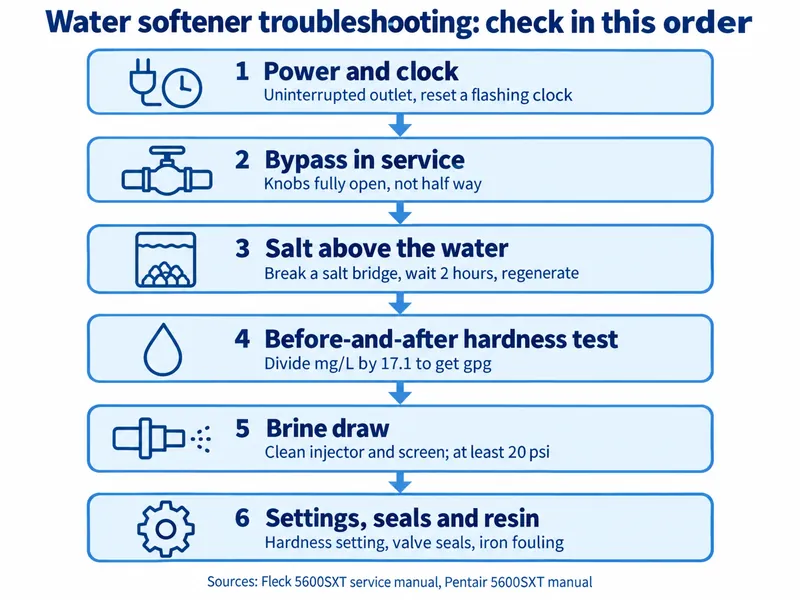
Water softener troubleshooting goes fastest in a fixed order: power, bypass, salt, a before-and-after hardness test, brine draw, then settings, seals and resin.
By the Water Softener Guide editors · Updated
Disclosure: watersoftenerguide.net is owned by the team behind SoftPro Water Systems and Quality Water Treatment, which sell some of the parts and systems we link to. Our steps follow the makers' manuals and published instructions, checked October 2026. Always check your own model's manual first. Ownership disclosure
View at Quality Water Treatment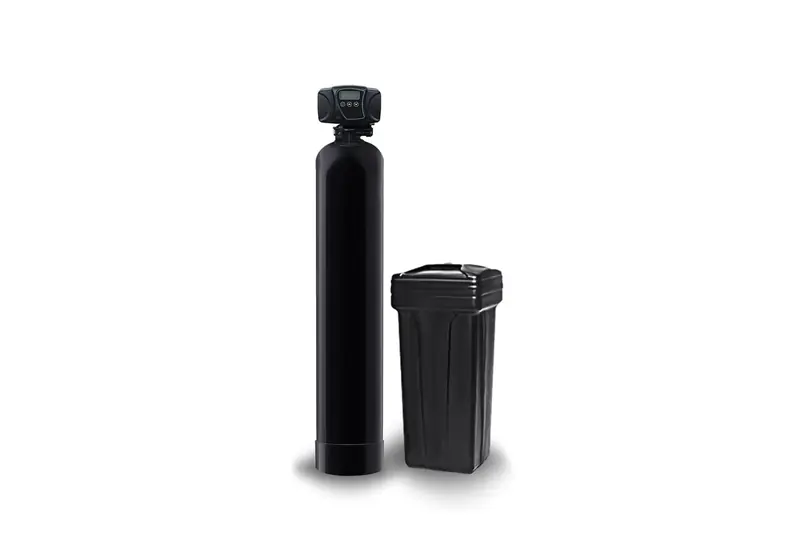
On this page
Key takeaways
- The Fleck 5600SXT service manual lists 7 causes of hard water, starting with an open bypass and an empty brine tank.
- A Fleck valve needs at least 20 psi of line pressure to draw brine, according to the same manual's troubleshooting table.
- After breaking a salt bridge, Pentair's 5600SXT manual says to wait 2 hours, then regenerate.
- Divide a lab result in mg/L by 17.1 to get the grains per gallon your valve expects (SoftPro Elite guide).
- Quality Water Treatment advises a yearly control-valve service with kit #60010307 on the 5600SXT.
- A well-sized softener regenerates about every 6 to 7 days in Penn State Extension's worked example.
Which water softener problem do you have?
Start from the symptom: each one points to a short list of causes in the Fleck 5600SXT service manual (P/N 42684) and Quality Water Treatment's troubleshooting page (Quality Water Treatment, our store). A softener has three parts that fail: the control valve on top, the brine tank beside it, and the resin inside the tall tank.
| Symptom | Likely causes | First check |
|---|---|---|
| Hard water at the taps | Bypass open, no salt, salt bridge, plugged injector screen | Bypass knobs and salt level |
| Salt level never drops | Salt bridge, clogged injector, valve not regenerating | Broom handle through the salt |
| Brine tank full of water | Plugged drain line flow control or injector, debris in brine valve | Injector and screen |
| Salt disappears fast | Salt setting, excess brine water, leaks counted by the meter | Hardness and reserve settings |
| Water on the floor | Bypass O-rings, loose fittings, overflow | Bypass and overflow line |
| Weak pressure | Iron buildup, debris in the valve inlet | Bypass test |
| Blank or flashing display | Power cut, error code | Outlet and clock |
The checks below run from quickest to slowest, so the valve rarely needs opening. Any step that opens the valve starts with the softener in bypass and the control unplugged.
What the manuals say
- 20 psiminimum working pressure for the 5600SXTPentair 5600SXT manual
- 2 hourswait after breaking a salt bridge before regeneratingPentair 5600SXT manual
- 6–7 daysbetween regenerations in a worked sizing examplePenn State Extension
- 50 galwater used per regenerationPenn State Extension
What are the easy checks to start with?
These five checks need no tools and no parts, and they rule out the simplest faults first.
- Power. The Fleck 5600SXT service manual says the valve needs an uninterrupted AC supply, and Pentair's 5600SXT manual says not to use a switched outlet. Check the plug, the adapter and any breaker. After an outage the time of day flashes; press any button to stop it and reset the clock, because a wrong clock means regenerations run at the wrong hour.
- Bypass position. On a Fleck plastic bypass the knobs sit in line with the inlet and outlet pipes in normal service. Quality Water Treatment's install guide warns that knobs not completely open let unsoftened water through. Other bypass styles have their own markings; our bypass valve guide covers them.
- Salt. Lift the lid once a month. Pellets belong higher than the brine, with the tank about a quarter to half filled; where your manual names a different level, follow it.
- Before-and-after test. Test raw water from an outside tap or the line before the softener, then softened cold water from a kitchen tap, with the same kit. A big gap means the resin is working; the is it working guide explains how to read it.
- Water heater. The Fleck manual's table lists hardness held in the hot water tank as a cause of hard water after a repair. Test cold water first, and if only hot water is hard, flush the heater repeatedly. Turn off the heater's power or gas first, beware of scalding water, and follow the heater maker's instructions.
What causes salt and brine problems in a water softener?
If the easy checks pass but the water is still hard, the brine side is the next suspect. The resin only recovers if the valve draws salty water out of the brine tank during regeneration.
Salt bridge. Pellets can fuse into a shelf that hangs above the water, leaving plain water underneath. Pentair notes the valve keeps cycling while the resin gets no real recharge, and that the tank works best below half-full. Its fix: crack the shelf with a broom handle, give it 2 hours to make brine, run a regeneration, and repeat once if the water stays hard. Full steps are on the salt bridge page.
Mushing. Sludge at the bottom of the tank blocks the brine pickup. Empty and clean the whole tank rather than piling more salt on top.
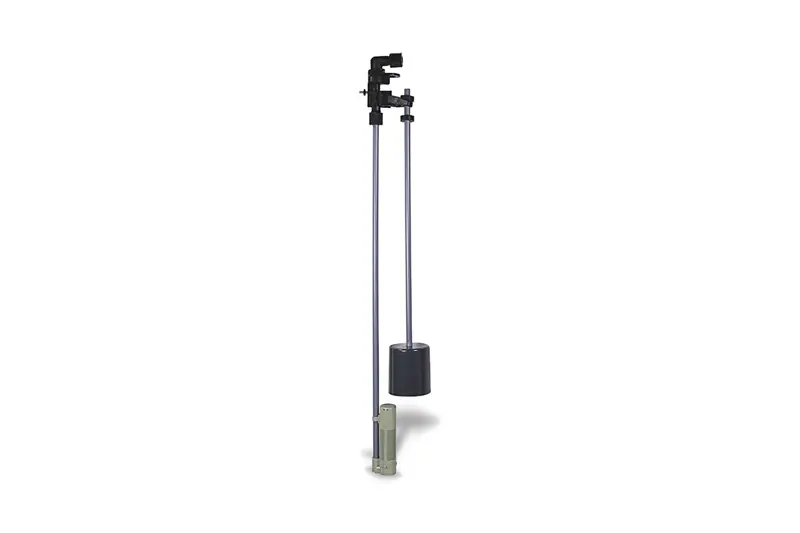
No brine draw. According to the Fleck table, suction fails when the drain line flow control, the injector or its screen is clogged, when supply pressure sits below 20 psi, or when the valve leaks internally. SoftPro's Fleck 5600SXT guide (SoftPro, our store) steps the valve to BD, pulls the brine tube off at the float and feels for suction. The injector cleaning guide walks through taking it apart.
Too much water in the brine tank. Here the Fleck table points to clogs at the injector or drain line flow control, a control that has stopped stepping, or grit lodged in the brine valve.
How do settings and the valve cause softener problems?
When salt and brine check out, look at what the valve has been told to do and whether it can do it.
- Hardness setting. The valve wants untreated hardness in gpg; a lab report in mg/L converts by dividing by 17.1, rounded up. Iron raises the number you enter; see water softener settings.
- Regeneration frequency. Penn State's worked example, a 20,000-grain unit serving 4 people on 10 gpg water, lands at about 6 to 7 days. Far more often than that wastes salt; far less often lets hardness through.
- Drain runs nonstop. Fleck's table traces this to a piston that won't find its position, grit inside the control, or a leak across internal seals.
- Error codes. Code meanings differ between Fleck board versions, so read them only from the manual that matches your board. Pentair's manual, for example, defines Err 2 as more than 99 days without a regeneration.
- Internal leaks. Worn seals, spacers or a worn piston let hard water slip past the resin. For the 5600SXT, Quality Water Treatment suggests a yearly rebuild of piston, seals and spacers using kit #60010307.
Our Fleck 5600SXT programming guide shows where each setting lives, and how to reset a softener covers soft and master resets.
What do resin problems look like?
Resin is the last thing to suspect because it fails slowly. Signs include hardness creeping back sooner after each regeneration, falling pressure, or beads at the taps.
- Iron fouling. Once iron passes 0.3 ppm, Quality Water Treatment's install guide calls for regular Pro-Res resin cleaning, poured into the brine well.
- Clogged resin. Penn State Extension says red, oxidized iron (iron exposed to air or chlorine) will clog the resin, and that some resin cannot be washed clean and has to be replaced.
- Bacteria and odor. Pentair says organic matter or bacteria in the supply can foul the unit. The cure is sanitizing with unscented bleach dosed by resin volume; Pentair gives 1.2 fl oz for each cubic foot, and your own manual's figure wins.
- Beads in the water. Small, dark, round beads in aerators usually mean a cracked distributor or damaged screens inside the tank.
When should you repair or replace a water softener?
Repair when the tank is sound and the fault is one part: an injector, a brine valve, a bypass or a board. Control heads are built for service, so seals and pistons can be swapped. Replacing resin makes sense when the valve is fine but capacity has dropped and cleaning no longer helps.
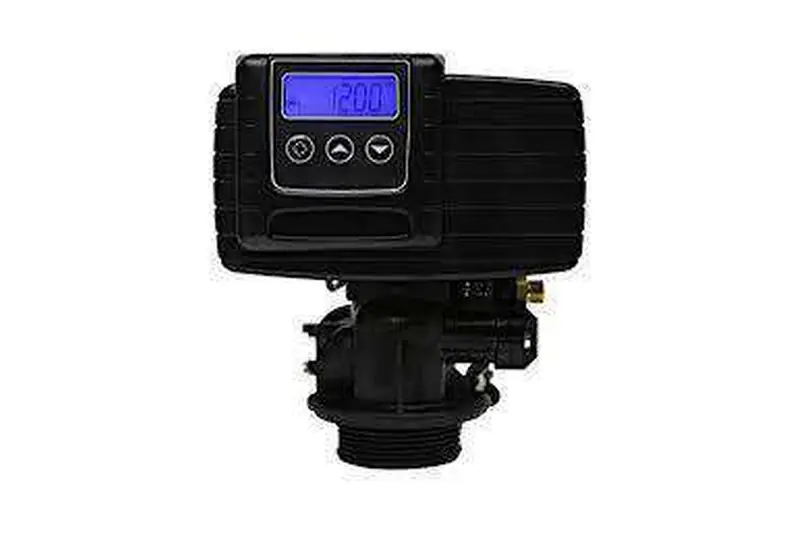
If a Fleck valve body is cracked or the board keeps failing, a new head may cost less than repeated repairs. Quality Water Treatment sells the Fleck 5600SXT 3/4-inch electronic meter valve (sold by Quality Water Treatment, our store) for replacing a worn head, from $469 (October 2026); the store says it replaces the older 5600SE.
Price a whole new system when the resin tank is cracked, parts for an old valve are hard to find, or the household has outgrown the unit. NDSU Extension puts retail prices for home softeners at roughly $400 to $2,700. On a private well, any new softener goes after the pressure tank. Whatever you choose, keep up the routine maintenance.
How we put this page together
This page is based on the Fleck 5600SXT downflow service manual (P/N 42684 Rev B) troubleshooting table, Pentair's 5600SXT operation manual (4005293 Rev B), Quality Water Treatment's and SoftPro's installation guides for their own systems, and Penn State and NDSU Extension publications, all checked in October 2026. We left out repair-cost estimates from store pages, regeneration intervals not backed by a worked example, error-code meanings for boards we could not match to a manual, and forum anecdotes.
Related guides
Common questions
What is the first thing to check when a softener stops softening?
Power and the clock, then the bypass position. Next, confirm there is salt in the tank and compare hardness before and after the unit. None of these checks needs the valve opened.
Can a power cut stop a softener from regenerating?
Yes. The Fleck 5600SXT manual lists interrupted power as the first reason a valve fails to regenerate. After an outage the clock flashes, and Pentair notes outages over 8 hours may lose the time setting, so reset the clock and consider a manual regeneration.
Can the household keep using water during troubleshooting?
Yes, if you put the softener in bypass. The house then gets unsoftened water while you work on the valve or brine tank. Return it to service slowly and run a cold tap for a few minutes afterwards.
Which softener repairs need a plumber?
Call a licensed plumber for leaks in the main line, drain or air-gap changes, or anything that needs pipe cutting to meet local code. Valve cleaning, salt problems and settings are normal owner jobs.
Why does the softener drain run all the time?
The Fleck table gives three causes: the valve is not positioning correctly, debris is lodged in the control, or an internal seal leaks. Unplug the valve, put it in bypass, and inspect the piston and seals or replace the power head.
Does low water pressure stop a softener from regenerating properly?
It can. The Fleck manual says a valve that fails to draw brine may need line pressure raised to 20 psi, and Pentair lists 20 psi as the bottom of the working range. Check the pressure gauge on a well system before blaming the valve.
Can hard water come from the water heater after a softener repair?
Yes. The Fleck manual's hard-water list includes hardness held in the hot water tank, and it calls for repeated flushing. Test a cold tap first to separate the two.
Parts for this job
Fleck 5600SXT 3/4" Electronic Meter Valve for Water Softeners
Check current options and prices at Quality Water Treatment.
View at Quality Water Treatmentwatersoftenerguide.net is owned by the team behind SoftPro Water Systems and Quality Water Treatment, which sell some of the parts and systems we link to. Ownership disclosure
More help: see our water softener guides.